
Introduction
In recent years, Halloween has become widely accepted and celebrated across cultures. It’s seen as a fun day filled with costumes, trick-or-treating, and parties. However, for Christians, Halloween poses a moral and spiritual dilemma. Is Halloween harmless fun, or is it an anti-holy day, conflicting with the Christian faith? By examining the roots of Halloween, the Bible’s teachings on darkness and light, and how Christians are called to live, we can better understand how Christians should approach this controversial holiday.
1. The Origins of Halloween
To understand why Halloween might be considered an “anti-holy day,” it’s important to look at its historical roots.
Halloween has origins that can be traced back to the ancient Celtic festival of Samhain. The Celts celebrated Samhain as a night when the boundary between the living and the dead was blurred, and spirits could roam the earth. People would dress up in costumes to ward off these spirits and light bonfires for protection. Later, when Christianity spread across Europe, the Church established All Saints’ Day on November 1 and All Hallows’ Eve on October 31, which became known as Halloween.
This mingling of pagan customs with Christian observance has caused ongoing controversy within the Christian community. Many believe that Halloween retains too many of its pagan roots and promotes an environment that glorifies fear, death, and the occult – concepts that contradict Christian beliefs.
Biblical Reflection:
The Bible warns against participating in customs that are linked to the occult and darkness. Deuteronomy 18:10-12 says, “Let no one be found among you who… practices divination or sorcery, interprets omens, engages in witchcraft, or casts spells… Anyone who does these things is detestable to the Lord.” For many Christians, Halloween’s connection with the supernatural, death, and occult practices raises concerns about whether participating in it is spiritually dangerous.
2. Darkness vs. Light in the Bible
Halloween often promotes imagery of darkness – ghosts, witches, and death – which can conflict with the Bible’s teachings about darkness and light. The Bible uses light as a metaphor for God’s truth and goodness, while darkness often represents evil, sin, and separation from God.
– John 8:12 records Jesus saying, “I am the light of the world. Whoever follows me will never walk in darkness but will have the light of life.”
– Ephesians 5:11 tells believers, “Have nothing to do with the fruitless deeds of darkness, but rather expose them.”
Christians are called to walk in the light and avoid participating in things that represent or glorify darkness. Halloween, with its focus on themes like horror, fear, and the macabre, can seem contrary to this calling. For many believers, celebrating Halloween may feel like embracing or trivializing the concept of darkness.
Example:
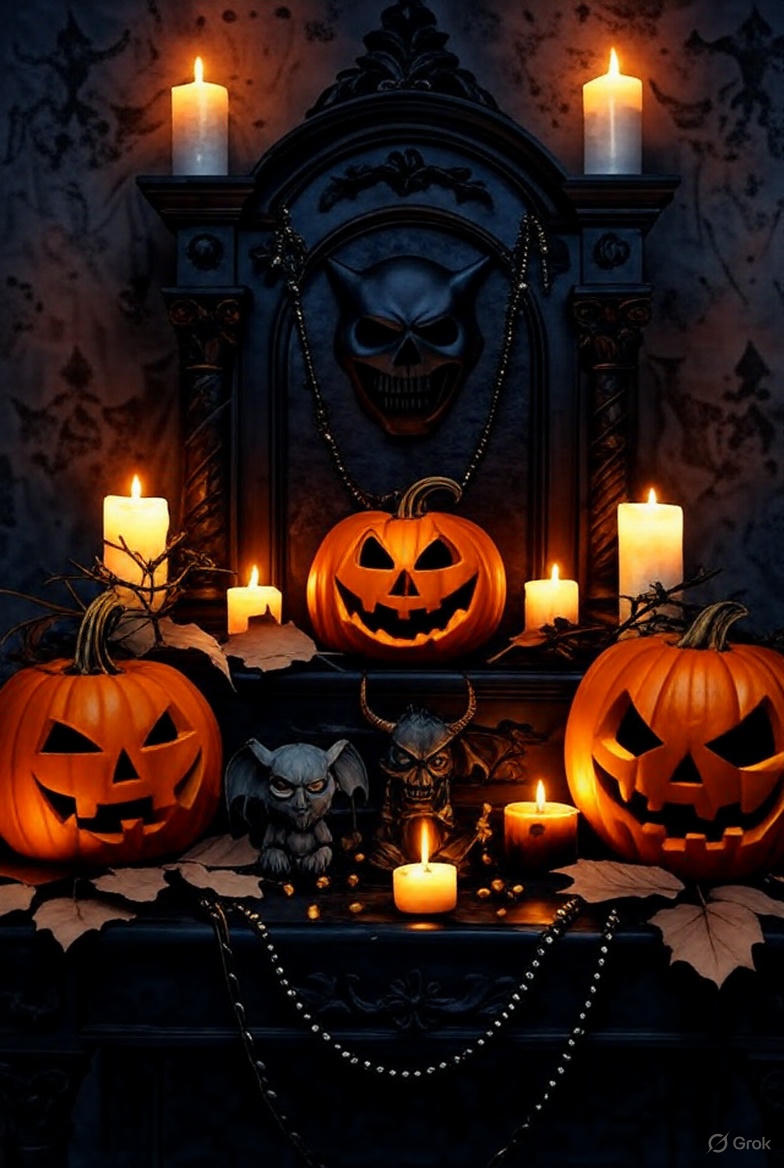
A Christian family might avoid decorating their home with imagery of skeletons, ghosts, or witches to honor their commitment to walking in the light. They may choose alternative ways to spend Halloween, such as hosting a “Harvest Festival” or a church gathering that celebrates God’s provision and the beauty of creation.
3. Spiritual Warfare and the Occult
The Bible teaches that Christians are engaged in spiritual warfare and are to be vigilant against the schemes of the devil. Halloween, with its depictions of witches, demons, and supernatural horror, may inadvertently open doors to spiritual influences that are not in alignment with God.
– Ephesians 6:12 warns, “For our struggle is not against flesh and blood, but against the rulers, against the authorities, against the powers of this dark world and against the spiritual forces of evil in the heavenly realms.”
– 1 Peter 5:8 also cautions believers, “Be sober-minded; be watchful. Your adversary, the devil, prowls around like a roaring lion, seeking someone to devour.”
Engaging with practices that have connections to the occult or glorify evil may compromise a believer’s spiritual life. The Bible calls Christians to resist the devil, not to give him any foothold in their lives (Ephesians 4:27).
Example:
Some Christians believe that even activities like dressing up as supernatural beings or participating in haunted houses can desensitize people to the real dangers of the occult. They choose instead to use October 31st as a day of prayer or community outreach, focusing on bringing the light of Christ to others.
4. Our Witness to the World
As followers of Christ, Christians are called to be “salt and light” in the world (Matthew 5:13-16). This means living in a way that reflects the holiness of God and distinguishes believers from the ways of the world.
– Romans 12:2 instructs Christians, “Do not conform to the pattern of this world, but be transformed by the renewing of your mind.”
– 1 Thessalonians 5:22 urges believers to “abstain from every form of evil.”
For many Christians, celebrating Halloween may be seen as conforming to a worldly holiday that does not glorify God. By choosing not to participate, Christians can use their actions as an opportunity to witness to others about the importance of living a holy life that honors God.
Example:
Rather than participating in Halloween festivities, some churches host an “alternative event” such as a “Light the Night” celebration or “Harvest Festival.” These events provide a safe and uplifting environment for families and children, demonstrating that Christians can have fun and celebrate God’s goodness without compromising their values.
5. Embracing a Day of Prayer and Reflection
Halloween can be a powerful opportunity for Christians to come together in prayer, recognizing the spiritual battle that exists in the world. Instead of engaging in Halloween customs, believers can choose to dedicate the day to prayer and seeking God’s protection for themselves, their families, and their communities.
Biblical Example of Prayerful Dedication:
In 2 Chronicles 7:14, God calls His people to humility and prayer, promising to heal the land if His people turn to Him. “If my people, who are called by my name, will humble themselves and pray and seek my face and turn from their wicked ways, then I will hear from heaven, and I will forgive their sin and will heal their land.”
By using Halloween as a day to gather in prayer, Christians can stand against the forces of darkness and uphold their faith in God. This could be a time to reflect on spiritual growth, pray for the salvation of others, and intercede for the community.
6. Loving Our Neighbors and Sharing the Gospel
Halloween is one of the few times of the year when neighbors are out and about, going door-to-door. Rather than completely avoiding Halloween, some Christians see it as an opportunity to share the love of Christ with their neighbors.
Biblical Command to Love:
Matthew 22:39 says, “You shall love your neighbor as yourself.” Christians are called to love their neighbors, and Halloween might provide an opportunity to connect with others.
Example of Sharing Light in Darkness:
Instead of participating in traditional Halloween activities, some Christian families choose to hand out treats with Scripture verses attached or host a gathering that reflects God’s love and hospitality. This approach allows them to be a light in the darkness, sharing the message of hope in Christ with others.
7. Personal Convictions and Discernment
Ultimately, how each Christian chooses to approach Halloween comes down to personal conviction and discernment. The Bible encourages believers to examine their hearts, seek wisdom, and follow the guidance of the Holy Spirit.
– Romans 14:5-6 teaches, “One person considers one day more sacred than another; another considers every day alike. Each of them should be fully convinced in their own mind.”
– James 1:5 advises that anyone lacking wisdom should ask God, who gives generously.
For some believers, choosing to avoid Halloween altogether is an expression of their commitment to God. Others may feel led to participate in a way that honors Christ, using the opportunity to reach others with His love. Ultimately, the goal is to follow the prompting of the Holy Spirit and seek to glorify God in whatever decision is made.
Conclusion
Halloween, with its origins in pagan customs and its emphasis on darkness, can be seen as an “anti-holy day” from a Christian perspective. The Bible calls believers to stand apart from practices that glorify evil and to embrace the light of Christ. By refraining from Halloween activities, or by using the holiday as an opportunity to share God’s love, Christians can live out their faith with integrity.
The question of Halloween is one that each believer must approach with prayer, discernment, and a heart fully surrendered to God. Ultimately, Christians are called to be holy and to live in a way that honors God’s truth. In the end, the decision to celebrate Halloween or abstain from it should be made with a desire to please God and to be a witness to the world.
post comments
Together We Rise: A Campaign for Everyone